6.9.11

live visuals | jesse kanda

Jesse Kanda is an independent graphic/motion designer, director and visual artist based in London.

This is pure inspiration. 

Check out this video for Barbara Panther Live Visuals.

agency of future predictions | scenario casting

What are scenarios?

Below is a statement from one of the bad guys. Shell.

Environmentally bad, however I am interested in their scenario casting as a possible agency for the Australian government.


Scenarios provide alternative views of the future. They identify some significant events, main actors and their motivations, and they convey how the world functions. We use scenarios to explore possible developments in the future and to test our strategies against those potential developments. 

When we reflect on situations or the future, we see the world through our own frames of reference. The purpose of scenario work is to uncover what these frames are, respecting differences rather than aiming for a consensus that puts them to one side.

Decision makers can use scenarios to think about the uncertain aspects of the future that most worry them – or to discover the aspects about which they should be concerned – and to explore ways in which these might unfold. Because there is no single answer to such enquiries, scenario builders create sets of scenarios. These scenarios all address the same important questions and all include those aspects of the future that are likely to persist, but each one describes a different way in which the uncertain aspects could play out.

Scenarios are particularly useful in situations where there is a desire to put challenges on the agenda proactively (for example when there are leadership changes and major impending decisions) and where changes in the global business environment are recognised but not well understood (such as major political changes and new emerging technologies).

As they identify discontinuity as a central issue for organisations, scenarios help businesses and governments to prepare for ‘surprising’ change. An organisation that is open to change is much more likely to survive and thrive than one that is continually chasing events.

Good scenarios are ones that explore the possible, not just the probable – providing a relevant challenge to the conventional wisdom of their users, and helping them prepare for the major changes ahead. They will provide a useful context for debate, leading to better policy and strategy, and a shared understanding of, and commitment to actions.

sign | structural meaning

The sign has two aspects, which may be reflected in the form:


The signifier is the physical entity which expresses the sign: the sound, shape or texture. the signified is the concept or emotion conveyed byt the sign.

Signification, the link between expression and concept, depends upon rules, codes, which are tacitly accepted by a community, and these rules are area which semiotics seeks to explore.

Signs rarely occur in a fragmented, isolated fashion; if they did the possibilities for human communication would be much more limited.


zizek | reality of the virtual

Having watched the Slavo Zizek's lecture on the 'reality of the virtual', I came across a mind-map produced by Peter Tsirchart on his Sight + Sound Blog. He offers a 8 part mind map which helps in visual communication of Zizek's ideas. 


5.9.11

the end of | geography


"The Internet Age has been hailed as the end of geography. In fact, the internet has a geography of its own, a geography made of networks and nodes that process information flows generated and managed from places. … It redefines distance but does not cancel geography". 
- MANUEL CASTELS

stan allan | diagrams of field conditions


“All grids are fields, but not all fields are grids. One of the potentials of the field is to redefine the relation between figure and ground.

If we think of the figure not as a demarcated object read against a stable field, but as an effect emerging from the field itself – as moments of intensity, as peaks or valley within a continuous field – than it might be possible to imagine figure and field as more closely allied. (…)”


vesica | sacred geometry

This geometry is the 'vesica pisces', the orifice formed by the interpenetration of two equal circles. It gives birth to many of the symbols of the secret geometry. Within it is the rhombus, formed by two equilateral triangles, and it is contained within a rectangle.

The Griffins' original design stems from ancient religious orders and their understanding of geomancy, an ancient science placing man in harmony with the earth. It is common to both Eastern and Western cultures. Therefore, Canberra has affinities with ancient architectural and planning principles embodied in Stonehenge, sacred Glastonbury, ancient Egyptian temples and pyramids, and even with the concept of the new Jerusalem. All these, and Canberra, share the sacred geometry emanating from the Vesica, the orifice formed from the interpenetration of two equal circles, one the sphere of the spiritual realm and the other symbolic of the world of material phenomena.

 Liberated from the Vesica are the circle, the square, the triangle, the rhombus and regular polygons which interrelate and, as such, determine the geometrical structure of the initial plan with its attendent architectural proposals; a framework clearly visible now and reinforced by the design of the new Parliament House.


australia | as semiotic system of government


This diagram represents the flow of signs within the meta-system of Australia. We have identified 'government' as a system, operating through 'agencies' which engage with the public though mediums, restricted by the channels they choose.

communication | visual + auditory

Every field, requires a vocabulary and a set of systems in analysing work.

Through the investigation of semiotic theory and the way in which government operates, communication repeatedly surfaced the crux of success for governmental agencies.

Lasswell (1948) claimed that an act of communication was adequately explained only when every aspect of his famous question has been answered.


As a starting point for the analysis of communication however, I believe Lasswell employs a very convincing argument, although the discussion can go much further...and I hope it will.

4.9.11

medium | methods

“the trouble with modern methods of communication is that whatever medium you choose, you’ll find it doesn’t suit everyone,” Robert Matthews (1986)

fun palace | virtual architecture

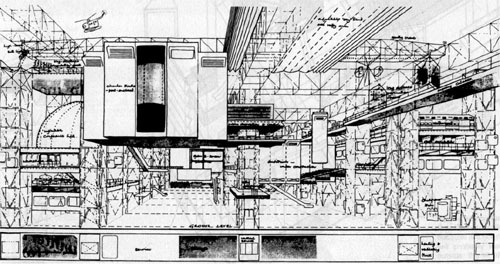
In his Fun Palace project, Price turned not to traditional architecture or fantasy but to the discourses and theories of his own time, such as the emerging sciences of cybernetics, information technology, and game theory, as well as Situationism and theater, to develop a radically new concept of improvisational architecture capable of negotiating the uncertain social terrain of postwar Britain. 


“Choose what you want to do – or watch someone else doing it. Learn how to handle tools, paint, babies, machinery, or just listen to your favourite tune. Dance, talk or be lifted up to where you can see how other people make things work. Sit out over space with a drink and tune in to what’s happening elsewhere in the city. Try starting a riot or beginning a painting – or just lie back and stare at the sky.”
As socially interactive architecture, the Fun Palace integrated concepts of technological interchangeability with social participation and improvisation as innovative and egalitarian alternatives to traditional free time and education, giving back to the working classes a sense of agency and creativity. The three-dimensional structure of the Fun Palace was the operative space-time matrix of a virtual architecture. The variable “program” and form of the Fun Palace were not conventional architecture but much closer to what we understand today as the computer program: an array of algorithmic functions and logical gateways that control temporal events and processes in a virtual device.


rosarch test | indeterminacy

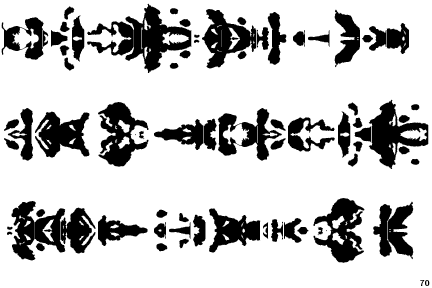
The Rorschach test; also known as the Rorschach inkblot test, the Rorschach technique, or simply the ink blot test) is a psychological test in which subjects' perceptions of inkblots are recorded and then analysed using psychological interpretation, complex scientifically derived algorithms, or both. 

Some psychologists use this test to examine a person's personality characteristics and emotional functioning. It has been employed to detect underlying thought disorder, especially in cases where patients are reluctant to describe their thinking processes openly. The test is named after its creator, Swiss psychologist Hermann Rorschach.

It offeres an interesting insight into the architecture of indeterminacy and the arbitrary nature of signifiers. 

It makes me question...if I see a building as it is...does everyone else see it as I do? Or am I missing something they have seen, or are they missing something that I have seen?


movement | how to start


With help from some surprising footage, Derek Sivers explains how movements really get started.

This is an interesting and very accessible way of understanding the nature of 'movements' and through which mediums they can be achieved. 

Perhaps we need more dancing in Canberra?

humpty dumpty | the master of the signifier


'There's glory for you!'
'I don't know what you mean by "glory",' Alice said.
Humpty Dumpty smiled contemptuously. 'Of course you don't — till I tell you. I meant "there's a nice knock-down argument for you!"'
'But "glory" doesn't mean "a nice knock-down argument",' Alice objected.
'When I use a word,' Humpty Dumpty said, in rather a scornful tone, 'it means just what I choose it to mean — neither more nor less.'
'The question is,' said Alice, 'whether you can make words mean so many different things.'
'The question is,' said Humpty Dumpty, 'which is to be master — that's all.'


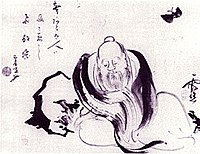
zhuang zi 庄子 | virtual transformation | 莊周夢蝶


昔者莊周夢為蝴蝶,栩栩然蝴蝶也,自喻適志與,不知周也。俄然覺,則蘧蘧然周也。不知周之夢為蝴蝶與,蝴蝶之夢為周與?周與蝴蝶則必有分矣。此之謂物化。

Once Zhuangzi dreamt he was a butterfly, a butterfly flitting and fluttering around, happy with himself and doing as he pleased. He didn't know he was Zhuangzi. Suddenly he woke up and there he was, solid and unmistakable Zhuangzi. But he didn't know if he was Zhuangzi who had dreamt he was a butterfly, or a butterfly dreaming he was Zhuangzi. Between Zhuangzi and a butterfly there must be some distinction! This is called the Transformation of Things. (translation. Burton Watson 1968)


zhuang zi 庄子 | words + meaning

荃者所以在魚,得魚而忘荃;
蹄者所以在兔,得兔而忘蹄;
言者所以在意,得意而忘言。
吾安得忘言之人而與之言哉?

"The fish trap exists because of the fish; once you've gotten the fish, you can forget the trap. The rabbit snare exists because of the rabbit; once you've gotten the rabbit you can forget the snare. Words exist because of meaning; once you've gotten the meaning you can forget the words. Where can I find a man who has forgotten words so I can have a word with him?"


1984 | unrelated oppositions

There is no logical necessity for morphologically unrelated oppositions, as Syme explains to Winston in the dystopian novel Nineteen Eighty-Four written by George Orwell in 1949:
It's a beautiful thing, the destruction of words. Of course the great wastage is in the verbs and adjectives... It isn't only the synonyms: there are also the antonyms. After all, what justification is there for a word which is simply the opposite of some other word? A word contains its opposite in itself. Take 'good', for instance. If you have a word like 'good', what need is there for a word like 'bad'? 'Ungood' will do just as well - better, because it's an exact opposite, which the other is not.
George Orwell

us + them | binary oppositions

It is a feature of culture that binary oppositions come to seem 'natural' to members of a culture. Many pairings of concepts (such as male-female and mind-body) are familiar within a culture and may seem commonsensical distinctions for everyday communicational purposes even if they may be regarded as 'false dichotomies' in critical contexts.

Rudyard Kipling satarised the apparently universal tendency to divide the people we know directly or indirectly as us and them. 


All nice people, like us are We
And everyone else is They:
But if you cross over the sea, 
Instead of over the way
You may end by (think of it)
Looking on We
As only a sort of They!

Rudyard Kipling
'We are They'

semiotics | analysing structures

Semiotics is probably best know an an approach to textual analysis, and in this form it is characterised by a concern with structural analysis. Structuralist analysis focuses on the structural relations which are functional in the signifying system at a particular moment in history. It involves identifying the constituent units in a semiotic system (such as a text or socio-cultural practice) and the structural relationships between them (oppositions, correlations and logical relations). This is not an empty exercise since 'relations are important for what they can explain: meangingful contrasts and permitted or forbidden combinations' 

Jonathan Culler 1975

integral theory | an introduction


Ken Wilber defines integral as:

“to integrate, to bring together, to join, to link, to embrace. Not in the sense of uniformity, and not in the sense of ironing out all of the wonderful differences, colours, zigs and zags of a rainbow-hued humanity, but in the sense of unity-in-diversity, shared commonalities along with our wonderful differences.” (A Theory of Everything)

“The word integral means comprehensive, inclusive, non-marginalising, embracing. Integral approaches to any field attempt to be exactly that: to include as many perspectives, styles, and methodologies as possible within a coherent view of the topic. In a certain sense, integral approaches are “meta-paradigms,” or ways to draw together an already existing number of separate paradigms into an interrelated network of approaches that are mutually enriching.”

spiral dynamics | an introduction


Spiral Dynamics argues that human nature is not fixed: humans are able, when forced by life conditions, to adapt to their environment by constructing new, more complex, conceptual models of the world that allow them to handle the new problems. Each new model transcends and includes all previous models. According to Beck and Cowan, these conceptual models are organized around so-called vMemes: systems of core values or collective intelligences, applicable to both individuals and entire cultures.


what if | ?

What if...there were no countries.
What if...there were no boundaries.
What if...there were no citizens.

We have created invisible boundaries between nations.

We are an island from the world. Can we create a capital from the country? Can we create a parliament from the capital?

Australia, as an island has a clearly delineated boundary around. Defined by nature, protected by man.

shakespeare said | quotes


"Tomorrow and tomorrow and tomorrow,
To the last syllable of recorded time,
And all our yesterdays have lighted fools
The way to dusty death. Out, out, brief candle!
Life's but a walking shadow, a poor player
That struts and frets his hour upon the stage
And then is heard no more: it is a tale
Told by an idiot, full of sound and fury,
Signifying nothing."
Told by an idiot, full of sound and fury,
Signifying nothing."
Told by an idiot, full of sound and fury,
Signifying nothing." 

(Macbeth V, iii)

floating signifier | definition

A floating signifier is variously defined as a signifier with a vague, highly variable, unspecifiable or non-existent signified. Such signifiers mean different things to different people: they may stand for many or even any signifieds; they may mean whatever their interpreters want them to mean.

In such a state of radical disconnection between signifier and signified, a sign only means that it means.


3.9.11

There is a stark parallel between the maps of the virtual world and those of nautical explorers during the last few hundred years.

kycmaerxthaere | parallel virtual + physical universe

The Kcymaerxthaere is a vast alternate universe created by Eames Demetrios, a California-based artist and filmmaker who began installing the plaques in 2003. The premise of the project is that the Kcymaerxthaere exists as its own parallel world, but its remnants are often visible in our own, “linear” world—intersections that Demetrios endeavors to commemorate by physically marking their presence.

Exploring the Kcymaerxthaere requires a hearty imagination as the fictional universe is based on the theory that we can change how we perceive our visual environment, or as Henry David Thoreau said,


“It’s not what you look at that matters, it’s what you see.” 


With a bit of mental flexing, these stories — accessible in virtual form online, and in individual physical sites, honour evens from the parallel world in our linear world. 


Kcymaerxthaere is a global (and more) work of 3-dimensional story telling. It is an alternative universe that is largely consistent with our linear world in some ways, though it has many different stories, rules, creatures, even laws of science it seems.

In a way, it is a bit like a novel with every page in a different place. Reading the markers and sites in situ is a kind of transformative experience that connects you to possibilities and stories in a whole new way.

Kcymaerxthaere is a parallel universe that intersects with much of our linear Earth. The name comes from the cognate words kcymaara (meaning "the true physicality of the planet") and xthaere(which is a shape with almost an infinity of edges or dimensions--infinity minus 29 to be precise). We explore and tell stories of these other realms through many media, but most famously by installing bronze plaques and historic sites that honor events from the parallel world in our linear world. - Eames Demetrious - creator of Kcymaerxthaere. 


26.8.11

helen keller | nominal realism

Helen Keller, who became blind and deaf at the age of 18 months, was gradually taught to speak to her nurse. At the age of 9 while playing with water she felt with her hand the motions of the nurse's throat and mouth vibrating the word 'water'. IN a sudden flash of revelation she cried out words to the effect that 'everything has a name!'

It is hardly that, even in mid-childhood, children sometimes appear to have difficulty in separating words from what they represent.

This is illustrated by Jean Piaget in an interview with a child aged 9.

'Could the sun have been called "moon" and the moon "sun"?'
'No.' 'Why not?'
'Because the sun shines brighter that the moon...''But if everyone had called the sun "moon", and the "moon" sun, would we have known it is wrong?'
'Yes, because the sun is always bigger, it always stays like it is and so does the moon.''Yes, but the sun isn't changed, only its name. could it have been called...etc.?'
'No...because the moon rises in the evening, and the sun in the day.'
(Piaget 1929: 81-2)
Therefore, for the child, words do not seem at all arbitrary.

19.8.11

time | as signifier


Time travel in the classic sense has no place in rational theory, but temporal distortion does exist on the quantum level, and more importantly it can be controlled.

Academician Prokhor Zakharov, "For I Have Tasted the Fruit" from Sid Meier's Alpha Centauri