20.10.11

so what *does* happen to your digital assets after you die? | john romano


Posted on 21 December 2010 by John Romano


This is a simple question and we wish there was a simple answer. Unfortunately there isn’t a standard way that Internet users can expect service providers to handle their accounts after death. Every provider has a “terms of service” (the legalese) that governs your account. Unfortunately for consumers, no two are alike.

Here’s a quick run down of some popular providers and what happens at each:
Facebook
Gmail
Twitter
Yahoo
YouTube

Facebook

Facebook covers the rights of deceased users in its privacy policy.

Your heirs can request that your account be deleted or “memorialized.” Memorialized profiles restrict profile access to confirmed friends, and allow friends and family to write on the user’s Wall in remembrance. You shouldn’t count on it staying active since anyone can request that it be memorialized by simply notifying Facebook and showing a death certificate or a news article that indicates your death.

Facebook has also introduced a new feature that allows you to “Download Your Information” This tool lets you download a copy of your photos, videos, wall posts, messages, friends list and other content. The file that you download can be opened in your browser so you can navigate through your content.

Gmail

Gmail provides instructions for gaining access to deceased user’s account in its help documents. They outline the steps to gaining access, which include a death certificate, and email you have received from the account in question and proof that you have legal authority over the estate.

Twitter

Twitter addresses this issue in its help documents:


If we are notified that a Twitter user has passed away, we can remove their account or assist family members in saving a backup of their public Tweets.
Please contact us with the following information:
Your full name, contact information (including email address), and your relationship to the deceased user.
The username of the Twitter account, or a link to the profile page of the Twitter account.
A link to a public obituary or news article.

Twitter is unique in that they offer survivors an archive of the user’s public Tweets. That’s actually very helpful as it’s often difficult to archive a Twitter account yourself.

Yahoo

Yahoo (which owns services like Flickr and Delicious) includes the following paragraph in its terms:


No Right of Survivorship and Non-Transferability. You agree that your Yahoo! account is non-transferable and any rights to your Yahoo! ID or contents within your account terminate upon your death. Upon receipt of a copy of a death certificate, your account may be terminated and all contents therein permanently deleted.

Yahoo takes a harsh stance on death, but the good news is that they will not take this action without the receipt of a death certificate. It’s possible for you to ask your digital executor to archive your Yahoo account contents before presenting Yahoo with a death certificate.

YouTube

YouTube also lists their policy for deceased users in its help documents.


If an individual has passed away and you need access to the content of his or her YouTube account, please fax or mail us the following information:
Your full name and contact information, including a verifiable email address.
The YouTube account name of the individual who passed away.
A copy of the death certificate of the deceased.
A copy of the document that gives you Power of Attorney over the YouTube account.
If you are the parent of the individual, please send us a copy of the Birth Certificate if the YouTube account owner was under the age of 18. In this case, Power of Attorney is not required.

19.10.11

digital avatars: what the? | john romano

Posted on 29 May 2011 by John Romano

What if you had someone there for you, every single day, without fail – if they were always ready with a kind word or a response to your latest musing. Never mad. Always caring and concerned. Always ready to take time to be with you.

Would it matter if he or she were a robot? Or no longer alive?

Enter digital avatars. Two companies, Virtual Eternity and Lifenaut have released “digital avatar” products. What is a digital avatar? Check out the websites!


Potential

What’s most interesting is not how this avatar looks and works today. It’s the potential that these avatars have for the future and what they are the beginning of. As you can see if you play with it, this avatar is pretty basic. It’s predictive ability is restricted to the very limited amount of information that I put in its database of my attitudes, feelings, and perspectives – my digital “mind file.”

This is because right now programming these avatars takes a lot of time and energy. But what if it took no energy? What if they tapped into your social media accounts and passively listened to every status update, comment, or post? Imagine how rich a profile it would have in just a few years.

In 2032

Fast forward a couple decades. The AI is 100 times better (Moore’s Law and all that). You can have a natural conversation. Your mind file has 20 years worth of data on your thoughts and beliefs. What was a manipulated still photo is a fully, three-dimensional representation of you. It’s crossed theuncanny valley and is completely convincing.

Now, imagine that you die, and this projection of you “lives” on.

To me, the most compelling questions this technology raises are:

• How would this technology change the way the living experience the death of a loved one?
• How can this technology be used to extended consciousness?
• Is it OK that this is the first step down to a road toward synthetic life forms?
• Is the idea of consciousness transfer to a digital medium and ultimately a new body something we want?

Is this the future of death?

digital immortality and death 2.0 | scott lachut


To further complicate matters, while the space continues to evolve at an accelerated rate, the legal system struggles to keep pace, leading to a current situation where notions of who exactly owns these digital assets – individuals or sites – remains unclear. Though you may have spent the last 20 years building your character’s dominance in the dungeons and on the battlefields of World of Warcraft, if you never pass along your login information to anyone who can carry on your legacy, what then?

In cases where credit card information is exchanged with a site, there is at least some proof of ownership, but this is still no guarantee. And given that much of the web’s foundation is based on loose affiliations and social transactions that are more often than not, anonymous, determining who really sent out thousands of emails from a Hotmail account is difficult at best.

As Lilian Edwards, professor of internet law at Sheffield University notes in a recent interview, lacking any concrete laws to follow, these matters fall to the discretionary policies (the terms and conditions that we scan across as we search for the “I Agree” check box) of the individual sites. Assuming that who owns this virtual flotsam and jetsam once you’re gone is something that concerns you or your loved ones, then this an eventuality that needs to be planned for.

Which leads us into the emerging commercial marketplace of Death 2.0, populated by companies hawking services to ensure your transition into the after life (both real and virtual) is as seamless as possible. Preparing people for the inevitability of their own demise is never any easy sell at any stage of the life, but given the relative youth of the audience that these sites are catering to, their prospects for return on investment are far down the road to say the least. And though these businesses might want to keep their own longevity in mind, their “future-forward” models point to a trend that can’t be ignored.

So while you’re still walking the hallowed hallways of the web, albeit non-corporeally, you can start planning for your after life. At Do Your Own Will, a site that allows you to create and print a simple, legally-binding contract online, you can take care of matters relating to your physical estate. As for sorting out the more complex questions surrounding your digital possessions, like determining who is going to inherit the social cache (and minutiae) of your Twitter account or run your thriving eBay store that trades in antique Pez Dispensers, turn to Dead Man Switch or Legacy Locker.

And if you always wanted a New Orleans-style funeral complete with a second line, then make it happen at My Wonderful Life because as the site advertises, “you only get one chance to make a last impression.” But why stop with your final day? Make your voice heard from beyond the grave without the need for seances or ouija boards. The Last Emailand Last Message Club offer a way for you to send emails to those you leave behind, from sentimental notes like birthday wishes and endorsements of love to secret messages like who did it and where the formula is buried.

Coping with the idea of death (either our own or someone else’s) is never an easy thing, and now with the evolution of the internet, we’re presented with an entirely new set of “things we can’t take with us”. It may be more complicated, but it doesn’t have to be overwhelming. Though admittedly, it’s a rather strange concept to wrap our heads around, considering that the digital environment already seems to exist halfway between the physical world and “the great unknown”.

Still, we always seem to adapt (and make up stories for the things we can’t explain). Needless to say, the continued shift in our perspective and customs to encompass the virtual worlds in which we increasingly live, work and play will be an interesting one to witness.

via PSFK: http://www.psfk.com/2009/08/digital-immortality-and-death-20.html#ixzz1bEdoXzUZ

the future of death | digiurn

Recent design school graduate Jake Shapiro of New York shared has created: “The Future of Death” examining how our internet and social media oriented lives have and will continue to change the way we think about and deal with death and grief.


cyberspace when you're dead | ron walker

Suppose that just after you finish reading this article, you keel over, dead. Perhaps you’re ready for such an eventuality, in that you have prepared a will or made some sort of arrangement for the fate of the worldly goods you leave behind: financial assets, personal effects, belongings likely to have sentimental value to others and artifacts of your life like photographs, journals, letters. Even if you haven’t made such arrangements, all of this will get sorted one way or another, maybe in line with what you would have wanted, and maybe not.

But many of us, in these worst of circumstances, would also leave behind things that exist outside of those familiar categories. Suppose you blogged or tweeted about this article, or dashed off a Facebook status update, or uploaded a few snapshots from your iPhone to Flickr, and then logged off this mortal coil. It’s now taken for granted that the things we do online are reflections of who we are or announcements of who we wish to be. So what happens to this version of you that you’ve built with bits? Who will have access to which parts of it, and for how long?

Not many people have given serious thought to these questions. Maybe that’s partly because what we do online still feels somehow novel and ephemeral, although it really shouldn’t anymore. Or maybe it’s because pondering mortality is simply a downer. By and large, the major companies that enable our Web-articulated selves have vague policies about the fate of our digital afterlives, or no policies at all. Estate law has only begun to consider the topic. Leading thinkers on technology and culture are understandably far more focused on exciting potential futures, not on the most grim of inevitabilities.

Nevertheless: people die. For most of us, the fate of tweets and status updates and the like may seem trivial (who cares — I’ll be dead!). But increasingly we’re not leaving a record of life by culling and stowing away physical journals or shoeboxes of letters and photographs for heirs or the future. Instead, we are, collectively, busy producing fresh masses of life-affirming digital stuff: five billion images and counting on Flickr; hundreds of thousands of YouTubevideos uploaded every day; oceans of content from 20 million bloggers and 500 million Facebook members; two billion tweets a month. Sites and services warehouse our musical and visual creations, personal data, shared opinions and taste declarations in the form of reviews and lists and ratings, even virtual scrapbook pages. Avatars left behind in World of Warcraft or Second Life can have financial or intellectual-property holdings in those alternate realities. We pile up digital possessions and expressions, and we tend to leave them piled up, like virtual hoarders.

At some point, these hoards will intersect with the banal inevitability of human mortality. One estimate pegs the number of U.S. Facebook users who die annually at something like 375,000. Academics have begun to explore the subject (how does this change the way we remember and grieve?), social-media consultants have begun to talk about it (what are the legal implications?) and entrepreneurs are trying to build whole new businesses around digital-afterlife management (is there a profit opportunity here?). Evan Carroll and John Romano, interaction-design experts in Raleigh, N.C., who run a site calledTheDigitalBeyond.com, have just published a tips-and-planning book, “Your Digital Afterlife,” with advice about such matters as appointing a “digital executor.”

Adele McAlear, a social-media and marketing consultant, became interested in this subject a few years ago, when one of her regular Twitter contacts died. A Web enthusiast who has created “Lord knows how many profiles” for herself in the course of road-testing various new services, she is an “advocate of creating content and putting it online.” And yet, she continues, it “hadn’t dawned on me, what happens to all of this stuff that you put out there, this digital litter that sort of accumulates.” That may be particularly true for people like McAlear, who have thoroughly integrated their Web expressions into their identity. (Indeed, she explores her new interest on a blog, DeathandDigitalLegacy.com.) But you don’t have to be a social-media consultant to live that way. More and more people do, as a matter of course. Millions of us are “sharing” our thoughts and tastes; our opinions and observations about WikiLeaks and “Glee” and the Tea Party and some weird dude on the subway this morning; and photographs of newborns and weddings and parties and — why not? — that weird dude on the subway. Maybe the momentous and the momentarily amusing add up to a pleasing means of real-time connection, but what do they add up to when we’re gone? The legacy of a life you hope your survivors will remember? Or a jumble of “digital litter” for them to sort through?

18.10.11

Digital Assets

A grandmother on her death bed tells her grandson. "I am leaving you with a farm. It has six tractors, 100 head of cattle, 60 sheep and $8,392,982 in cash. Her grandson replies "Grandma, I never knew you had a farm, why haven't you told me about this earlier?" "I didn't want you to worry about taking care of it until I was gone." She replied with a smile. "Where is the farm." Begged the grandson eagerly. "On Farmville dear."

14.10.11

where to from here?


Three generations have now been using computers most of their lives. We have been busy collecting digital photos, music and movies. Recently, we have begun uploading our digital assets to the Web and sharing them with each other.
We have also been busy expressing and describing our thoughts using blogs and online profiles. As of late we have begun connecting these profiles to one another, creating a complex landscape of online social networks. When we look at how fast things are changing we see that much of this innovation has happened in just the last 5 years. 

Now imagine leading a quality digital life for 50 more years. What will happen when you die? What will become of your online accounts? Your data? What do people pass on to their heirs? Can your survivors box up your digital life and archive it? Or will the data be lost without people to tend it? 

Or will the data live on forever? Can our digital self image achieve immortality? 


A whole industry will be born to answer these questions and satisfy a desire that has existed since the beginning of time - the desire for immortality. We all can't have a terra cotta army in our tomb, or a great pyramid above us. But for a fist full of dollars we will be able to maintain our digital footprint for all time. Just you wait and see.

4.10.11

庄子 - the wheelwright


Chuang Tzu - Duke Hwan and the Wheelwright


Duke Hwan of Khi, first in his dynasty,
sat under his canopy reading his philosophy.
And Phien the wheelwright was out in the yard
making a wheel.

Phien laid aside hammer and chisel,
climbed the steps
and said to duke Hwan,
“May I ask you, Lord,
what is this you are reading?”

Said the duke: “The experts, the authorities.”
Phien asked: “Alive or dead?”
The duke said: “Dead, a long time.”
“Then,” said the wheelwright,
“you are only reading the dirt they left behind.”

The duke replied, “What do you know about it?
You are only a wheelwright.
You had better give me a good explanation
or else you must die.”

The wheelwright said,
“Let us look at the affair from my point of view.
When I make wheels, if i go easy they fall apart,
and if I am too rough they don’t fit.
But if I am neither too easy nor too violent
they come out right,
and the work is what I want it to be.

“You cannot put this in words,
you just have to know how it is.
I cannot even tell my own son exactly how it is done,
and my own son cannot learn it from me.
Se here I am, seventy years old, still making wheels!

The men of old took all they really knew
with them to the grave.
And so, Lord, what you are reading there
is only the dirt they left behind them.”

digital donation

...please don't take your memories to heaven...
...we need them here on earth...
If organs can give life, surely memories can give knowledge? Is this not as important?

23.9.11

dna | births deaths and marriages

It is anticipated that DNA would be an extension of the current state run Birth Deaths + Marriages registries.


16.9.11

greg tran | mediating mediums

I have been very impressed by the work of Greg Tran.

Check out his blog here.

With his Harvard GSD Thesis Prize 2011 winning work  "Mediating Mediums - the Digital 3d" he perfectly defines "virtual architecture".

He creates a clear distinction between the digital 2d and the digital 3d.

All work below is the work of Greg Tran.


Mediating Mediums - The Digital 3d from Greg Tran on Vimeo.
Tran_MediatingMediums

lecture | 16.09

Sustainable practice...with a twist.


|Design for a lifetime |

From manufacturing to disposal, the things we make create environmental impacts throughout their life cycles. In "Whole Systems Design" you'll discover opportunities for saving resources, like materials and energy, can often be uncovered early in the design process, by identifying the right problems to solve before engineering begins.

Autodesk talks mainly about products, but this applies to architecture as well. 


NOTES - from Sensai Santo


  • a huge part of architecture after is has been decommissioned becomes land fill. 
  • don't just slap on photovoltaic cells
  • think about the sustainability of the actual product/material you are placing on the building


Life cycles of Architecture
Pyramids: Permanent Existence through Maintenance


Ise Shrines: Permanent Existence through Reconstructions

Street Restaurant: Dynamic + Ephemeral


NEW Babylon [Constant 1957~]

Alternative architectural spaces, where people can go through a certain experience/activity. 

How can the town be designed so that people can go through spontaneous activities? 

What could people be constructing and altering in space to think about this?

Unhappy with a fixed architectural/governmental system. 


How can we rethink about NEW Babylon in the 21st century?
Whatever you are introducing must have an unique identity. 
We could provide the infrastructure for the people to create something in the future.


14.9.11

digital afterlife | 2 directions

After settling on the digital afterlife as a research topic, I have been wandering off in two opposing directions...


  1. Is the digital afterlife a place for people to rest their "digital life" as an eternal virtual tomb?
  2. Is the digital afterlife the next step in the evolution of how we commemorate the dead?
I suppose there is a "place" versus "concept" debate which I am yet to have. 

Currently the economical value of the digital afterlife is gaining momentum. Companies such as If I Die, itomb and the digital beyond are claiming their plots in the virtual cemetery, while charity organisations such as buy life are using the "digital death" of celebrity to raise awareness and funds for HIV awareness and research. Watch the video here.


13.9.11

death | your experience

everlasting | digital life


Oh, the future! Where we live! You have delivered so much! And yet, you are also confusing. I can share anything I want -- pretty much -- with anyone, anywhere. Which is great! But on the other hand, who owns my data? Not so great. When I die, will I really want my children, or spouse to see every detail of my misspent youth? To be able to read every email I ever sent in my life? Or, will I want them to know everything about me, and be glad there's a way for them to do that? (Hard to know at the moment, seeing as children are likely far off for me, as I have trouble enough remembering to feed both our cats.)
It might seem like not such a big deal to consider what happens to your digital assets after you die -- you're dead! Who cares! But who you are in your online life, may not necessarily be the person your loved ones know. And not in an "I lived a secret life as an arms-dealing polygamist performance artist -- Surprise!" But more as in, this is a problem you might encounter when you consider that correspondence is only ever intended for the people it's sent between in the first place. For one example: you might discover someone you knew, to have been especially hard-bitten and shrewd in their business dealings, and this would colour their character in a way that might upset you -- if you'd read through dozens of emails in which they acted brutally with others.
Or, to be more blunt: I have a Yahoo address that goes back to my mid-teens. There is no way in hell I would ever consent to my significant others having access to my tortured, and no doubt poorly worded, teenage love letters.
There are countless hypotheticals for this: sensitive business correspondence (like an idea you never patented); explicit emails (with photo attachments) from lovers; a note to yourself about how much you hated your mother. Any of these private thoughts could be things that you want to remain private after you're gone. 
We've heard plenty about the downsides, but equally, there are instances in which you might want your family to have access to your digital assets, like a PayPal account, or any other monetary assets you'd want your next of kin to have access to, but that will require password access for them to do so. And there are more sentimental things, like photos and letters -- or an entire lifecast, if that's what you want to do -- that would let people in your life know who you were to a degree that hasn't been possible until now. I remember the thrill of finding old photos of my father that his family sent to me after he died; it was a window into his life, who he was as a young man, that I had no real knowledge of. And they were only a few images. The sheer deluge of imagery, video and information about ourselves that we now share will likely make those kinds of discoveries a thing of the past.
So, what to do with your digital assets for now? Back up your data. Make hardcopies of vital information. Stipulate in your will what you want to have done with your digital assets, and who can access which parts of them (though, it's unclear at the moment which laws would be applicable in which territories, as many web services are hosted overseas. When you use these services -- whether email, social network or photo or video sharing site -- you've agreed to their terms and conditions which might not be impacted by other countries laws, according to the Australian Law Society). Keep an up to date list of your passwords on paper in a secure place you have made note of in your will.
Also, the machines could just rise up and uplug everything, so better safe than sorry.
by Elmo Keep March 16, 2010 at 02:40pm

9.9.11

death art | simulated reality


Big Thoughts at The Bell House with Reggie Watts from Tom Mason on Vimeo.

Reggie Watts on - DEATH, ART + SIMULATED REALITY.

birth | of a word


"Imagine if you could record your life, everything you said, everything you did, available in a perfect memory store at your fingertips. So you could go back and find memorable moments and relive them."
- Deb Roy


Deb Roy directs the Cognitive Machines group at the MIT Media Lab, where he studies how children learn language, and designs machines that learn to communicate in human-like ways. To enable this work, he has pioneered new data-driven methods for analyzing and modeling human linguistic and social behavior. He has authored numerous scientific papers on artificial intelligence, cognitive modeling, human-machine interaction, data mining, and information visualization.

Deb Roy was the co-founder and serves as CEO of Bluefin Labs, a venture-backed technology company. Built upon deep machine learning principles developed in his research over the past 15 years, Bluefin has created a technology platform that analyzes social media commentary to measure real-time audience response to TV ads and shows.

your final status | update

Many of us have a social media presence -- a virtual personality made up of status updates, tweets and connections, stored in the cloud. Adam Ostrow asks a big question: What happens to that personality after you've died? Could it ... live on?


virtual | cemetery

Why do we bury the dead?

I want to propose a new ritual of mourning - a virtual memorial.

Perhaps this could be the realignment of the Births, Deaths + Marriages registries across Australia?


7.9.11

situational | types


Design seldom benefits from infinite possibilities. It is more likely to be beneficial and appreciated when its variations occur on a few appropriate themes.

Much as architecture depends on habitual patterns for its liveability, so the ad hoc local networks of devices must produce recurrent types. Whether those types reflect technological possibilities or human patterns becomes a matter of design. 

Here follows a rudimentary typology of thirty situations. 

| one set of situational types |

| at work |
  • Deliberating (places for thinking)
  • Presenting (places for speaking in groups)
  • Collaborating (places for working within groups)
  • Dealing (places for negotiating)
  • Documenting (places for references resources)
  • Officiating (places for institutions to serve their constituencies)
  • Crafting (places for skilled practice)
  • Associating (places where businesses form ecologies)
  • Learning (places for experiments and explanations)
  • Cultivating (places for stewardship)
  • Watching (places for monitoring)
| at home |
  • Sheltering (places with comfortable climate)
  • Recharging (places for maintaining the body)
  • Idling (restful places for watching the world go by)
  • Confining (places to be held in)
  • Servicing (places with local support networks)
  • Metering (places where services flow incrementally)
| on the to town...|
  • Eating, drinking, talking (places for socialising)
  • Gathering (places to meet)
  • Cruising (places for seeing and being seen)
  • Belonging (places for insiders)
  • Shopping (places for recreational retailing)
  • Sporting (places for embodied play)
  • Attending (places for cultural productions)
  • Commemorating (places for ritual)
| on the road...|
  • Gazing/touring (places to visit)
  • Hoteling (places to be at home away from home)
  • Adventuring (places for embodied challenge)
  • Driving (car as place)
  • Walking (places at human scale)

situated types | typology

Technology might at least distinguish among the life patterns that it so often alters. Designers of digital technology need to recognise living situations amid the legacy of conventions that they so readily declare obsolete. In a a field better known for its frontier mentality, consider the role of typology. 
McCullough, M. (2004). Digital Ground: architecture, pervasive computing, and environmental knowing. Cambridge. MIT Press.

We need a typology of situated interactions. By extending living patterns of inhabited space, we can strive to make technology simpler, more adaptive, and more social. The alternative is chaos. Much as free-form experimentation with unprecedented technologies in modern building often led to socially detrimental results, now pervasive computing creeps toward huge design failures. Expect wrecks. 


6.9.11

augmented reality | parody


is it really worth it? 

another path | to be

MASNAVI from Murat Pak on Vimeo.

node project | singularity

The Node from Murat Pak on Vimeo.

soft | indeterminacy

Soft Indeterminacy from Greg Castrigano on Vimeo.

mind map | floating signifier

As a group, we have created a mind map that follows our thought processes.

password: monkeypants

mind map | semiotics

In order to understand the school of semiotics, I created a semiotic mind map.


authority | virtual

Few never-built buildings have attracted as much attention as Jeremy Bentham’s“Panopticon.” And it’s easy to understand why.

The panopticon was a prison. As Bentham imagined it, a circular tower would stand in the center of a ring of cells stacked several stories high. By manipulating light and perspective, the contents of the central tower, where the warden was to sit, was concealed from the prisoners, while the cells and their contents were always visible, lighted by small windows in the exterior wall.

As Foucault later said, the Panopticon is a simple idea, once someone has thought of it. But why is it important? Influential?

A common interpretation of the panopticon adopts an almost religious tenor. The warden — unseen, though (for all we know) all-seeing: pan-optic — knows exactly what happens within his domain. He, and only he, has the power of unobstructed observation, including the power to observe his own material agents, his prison guards, prison doctors, and so on. But he himself cannot intervene. To be seen is to lose power; to be seen is to inform everyone else that the prison is suddenly not under observation, that the grip of power has slipped.

As Lacan/Zizek would argue, to see the prison warden, to see him walk about in person, deflates virtual authority: once the warden can be seen, he becomes impotent, flaccid, perhaps funny, but certainly not nearly as threatening or powerful as he might have seemed before. In other words, the idea of the prison warden is more powerful than the person himself — and as such, he must remain concealed in the tower, invisible yet omnipresent, in order to maintain power. Likewise, the idea of being monitored is more powerful than actually being monitored.

live visuals | jesse kanda

Jesse Kanda is an independent graphic/motion designer, director and visual artist based in London.

This is pure inspiration. 

Check out this video for Barbara Panther Live Visuals.

agency of future predictions | scenario casting

What are scenarios?

Below is a statement from one of the bad guys. Shell.

Environmentally bad, however I am interested in their scenario casting as a possible agency for the Australian government.


Scenarios provide alternative views of the future. They identify some significant events, main actors and their motivations, and they convey how the world functions. We use scenarios to explore possible developments in the future and to test our strategies against those potential developments. 

When we reflect on situations or the future, we see the world through our own frames of reference. The purpose of scenario work is to uncover what these frames are, respecting differences rather than aiming for a consensus that puts them to one side.

Decision makers can use scenarios to think about the uncertain aspects of the future that most worry them – or to discover the aspects about which they should be concerned – and to explore ways in which these might unfold. Because there is no single answer to such enquiries, scenario builders create sets of scenarios. These scenarios all address the same important questions and all include those aspects of the future that are likely to persist, but each one describes a different way in which the uncertain aspects could play out.

Scenarios are particularly useful in situations where there is a desire to put challenges on the agenda proactively (for example when there are leadership changes and major impending decisions) and where changes in the global business environment are recognised but not well understood (such as major political changes and new emerging technologies).

As they identify discontinuity as a central issue for organisations, scenarios help businesses and governments to prepare for ‘surprising’ change. An organisation that is open to change is much more likely to survive and thrive than one that is continually chasing events.

Good scenarios are ones that explore the possible, not just the probable – providing a relevant challenge to the conventional wisdom of their users, and helping them prepare for the major changes ahead. They will provide a useful context for debate, leading to better policy and strategy, and a shared understanding of, and commitment to actions.

sign | structural meaning

The sign has two aspects, which may be reflected in the form:


The signifier is the physical entity which expresses the sign: the sound, shape or texture. the signified is the concept or emotion conveyed byt the sign.

Signification, the link between expression and concept, depends upon rules, codes, which are tacitly accepted by a community, and these rules are area which semiotics seeks to explore.

Signs rarely occur in a fragmented, isolated fashion; if they did the possibilities for human communication would be much more limited.


zizek | reality of the virtual

Having watched the Slavo Zizek's lecture on the 'reality of the virtual', I came across a mind-map produced by Peter Tsirchart on his Sight + Sound Blog. He offers a 8 part mind map which helps in visual communication of Zizek's ideas. 


5.9.11

the end of | geography


"The Internet Age has been hailed as the end of geography. In fact, the internet has a geography of its own, a geography made of networks and nodes that process information flows generated and managed from places. … It redefines distance but does not cancel geography". 
- MANUEL CASTELS

stan allan | diagrams of field conditions


“All grids are fields, but not all fields are grids. One of the potentials of the field is to redefine the relation between figure and ground.

If we think of the figure not as a demarcated object read against a stable field, but as an effect emerging from the field itself – as moments of intensity, as peaks or valley within a continuous field – than it might be possible to imagine figure and field as more closely allied. (…)”


vesica | sacred geometry

This geometry is the 'vesica pisces', the orifice formed by the interpenetration of two equal circles. It gives birth to many of the symbols of the secret geometry. Within it is the rhombus, formed by two equilateral triangles, and it is contained within a rectangle.

The Griffins' original design stems from ancient religious orders and their understanding of geomancy, an ancient science placing man in harmony with the earth. It is common to both Eastern and Western cultures. Therefore, Canberra has affinities with ancient architectural and planning principles embodied in Stonehenge, sacred Glastonbury, ancient Egyptian temples and pyramids, and even with the concept of the new Jerusalem. All these, and Canberra, share the sacred geometry emanating from the Vesica, the orifice formed from the interpenetration of two equal circles, one the sphere of the spiritual realm and the other symbolic of the world of material phenomena.

 Liberated from the Vesica are the circle, the square, the triangle, the rhombus and regular polygons which interrelate and, as such, determine the geometrical structure of the initial plan with its attendent architectural proposals; a framework clearly visible now and reinforced by the design of the new Parliament House.


australia | as semiotic system of government


This diagram represents the flow of signs within the meta-system of Australia. We have identified 'government' as a system, operating through 'agencies' which engage with the public though mediums, restricted by the channels they choose.

communication | visual + auditory

Every field, requires a vocabulary and a set of systems in analysing work.

Through the investigation of semiotic theory and the way in which government operates, communication repeatedly surfaced the crux of success for governmental agencies.

Lasswell (1948) claimed that an act of communication was adequately explained only when every aspect of his famous question has been answered.


As a starting point for the analysis of communication however, I believe Lasswell employs a very convincing argument, although the discussion can go much further...and I hope it will.

4.9.11

medium | methods

“the trouble with modern methods of communication is that whatever medium you choose, you’ll find it doesn’t suit everyone,” Robert Matthews (1986)

fun palace | virtual architecture

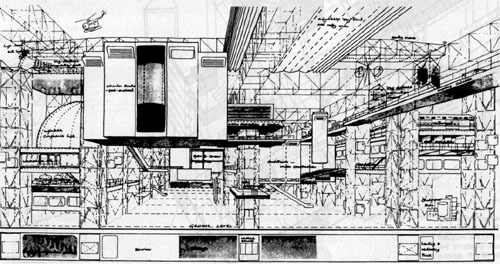
In his Fun Palace project, Price turned not to traditional architecture or fantasy but to the discourses and theories of his own time, such as the emerging sciences of cybernetics, information technology, and game theory, as well as Situationism and theater, to develop a radically new concept of improvisational architecture capable of negotiating the uncertain social terrain of postwar Britain. 


“Choose what you want to do – or watch someone else doing it. Learn how to handle tools, paint, babies, machinery, or just listen to your favourite tune. Dance, talk or be lifted up to where you can see how other people make things work. Sit out over space with a drink and tune in to what’s happening elsewhere in the city. Try starting a riot or beginning a painting – or just lie back and stare at the sky.”

As socially interactive architecture, the Fun Palace integrated concepts of technological interchangeability with social participation and improvisation as innovative and egalitarian alternatives to traditional free time and education, giving back to the working classes a sense of agency and creativity. The three-dimensional structure of the Fun Palace was the operative space-time matrix of a virtual architecture. The variable “program” and form of the Fun Palace were not conventional architecture but much closer to what we understand today as the computer program: an array of algorithmic functions and logical gateways that control temporal events and processes in a virtual device.


rosarch test | indeterminacy

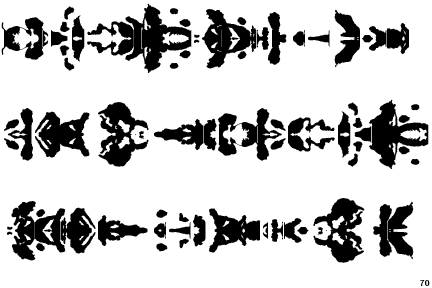
The Rorschach test; also known as the Rorschach inkblot test, the Rorschach technique, or simply the ink blot test) is a psychological test in which subjects' perceptions of inkblots are recorded and then analysed using psychological interpretation, complex scientifically derived algorithms, or both. 

Some psychologists use this test to examine a person's personality characteristics and emotional functioning. It has been employed to detect underlying thought disorder, especially in cases where patients are reluctant to describe their thinking processes openly. The test is named after its creator, Swiss psychologist Hermann Rorschach.

It offeres an interesting insight into the architecture of indeterminacy and the arbitrary nature of signifiers. 

It makes me question...if I see a building as it is...does everyone else see it as I do? Or am I missing something they have seen, or are they missing something that I have seen?


movement | how to start


With help from some surprising footage, Derek Sivers explains how movements really get started.

This is an interesting and very accessible way of understanding the nature of 'movements' and through which mediums they can be achieved. 

Perhaps we need more dancing in Canberra?

humpty dumpty | the master of the signifier


'There's glory for you!'
'I don't know what you mean by "glory",' Alice said.
Humpty Dumpty smiled contemptuously. 'Of course you don't — till I tell you. I meant "there's a nice knock-down argument for you!"'
'But "glory" doesn't mean "a nice knock-down argument",' Alice objected.
'When I use a word,' Humpty Dumpty said, in rather a scornful tone, 'it means just what I choose it to mean — neither more nor less.'
'The question is,' said Alice, 'whether you can make words mean so many different things.'
'The question is,' said Humpty Dumpty, 'which is to be master — that's all.'


zhuang zi 庄子 | virtual transformation | 莊周夢蝶


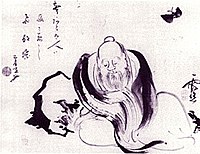
昔者莊周夢為蝴蝶,栩栩然蝴蝶也,自喻適志與,不知周也。俄然覺,則蘧蘧然周也。不知周之夢為蝴蝶與,蝴蝶之夢為周與?周與蝴蝶則必有分矣。此之謂物化。

Once Zhuangzi dreamt he was a butterfly, a butterfly flitting and fluttering around, happy with himself and doing as he pleased. He didn't know he was Zhuangzi. Suddenly he woke up and there he was, solid and unmistakable Zhuangzi. But he didn't know if he was Zhuangzi who had dreamt he was a butterfly, or a butterfly dreaming he was Zhuangzi. Between Zhuangzi and a butterfly there must be some distinction! This is called the Transformation of Things. (translation. Burton Watson 1968)


zhuang zi 庄子 | words + meaning

荃者所以在魚,得魚而忘荃;
蹄者所以在兔,得兔而忘蹄;
言者所以在意,得意而忘言。
吾安得忘言之人而與之言哉?

"The fish trap exists because of the fish; once you've gotten the fish, you can forget the trap. The rabbit snare exists because of the rabbit; once you've gotten the rabbit you can forget the snare. Words exist because of meaning; once you've gotten the meaning you can forget the words. Where can I find a man who has forgotten words so I can have a word with him?"


1984 | unrelated oppositions

There is no logical necessity for morphologically unrelated oppositions, as Syme explains to Winston in the dystopian novel Nineteen Eighty-Four written by George Orwell in 1949:
It's a beautiful thing, the destruction of words. Of course the great wastage is in the verbs and adjectives... It isn't only the synonyms: there are also the antonyms. After all, what justification is there for a word which is simply the opposite of some other word? A word contains its opposite in itself. Take 'good', for instance. If you have a word like 'good', what need is there for a word like 'bad'? 'Ungood' will do just as well - better, because it's an exact opposite, which the other is not.
George Orwell

us + them | binary oppositions

It is a feature of culture that binary oppositions come to seem 'natural' to members of a culture. Many pairings of concepts (such as male-female and mind-body) are familiar within a culture and may seem commonsensical distinctions for everyday communicational purposes even if they may be regarded as 'false dichotomies' in critical contexts.

Rudyard Kipling satarised the apparently universal tendency to divide the people we know directly or indirectly as us and them. 


All nice people, like us are We
And everyone else is They:
But if you cross over the sea, 
Instead of over the way
You may end by (think of it)
Looking on We
As only a sort of They!

Rudyard Kipling
'We are They'